Work with me

Hire the experience, not the hype.

Fifteen years in software quality, test automation, and delivery. Founder of CyborgTests, host of the Hot Testing community, and the person teams call when releases hurt, tests lie, or the pipeline costs more than it protects. I work with individuals and with teams — mentoring, training, reviews, and planning.

01 / Mentoring

Grow faster with someone who has already hit the wall.

For engineers who want to move from writing tests to designing quality — and for leads who need a sounding board that is not their manager.

1:1 mentoring

Personal sessions for QA engineers, SDETs, and test leads, shaped around your current codebase and your next career step.

  • Test automation architecture and framework design decisions
  • Playwright, TypeScript, and modern JavaScript in practice
  • Using AI in your daily testing work without fooling yourself
  • Career direction: senior, lead, SDET, or engineering management

Format · Recurring calls, 60–90 min, with homework between sessions

Group mentoring

A small cohort working through the same roadmap together, so people learn from each other's code and not only from mine.

  • Groups of four to eight engineers, shared curriculum
  • Weekly sessions with live code review of real work
  • Practical assignments, feedback on every submission
  • Cheaper per person than 1:1, stronger peer momentum

Format · Weekly sessions over a fixed number of weeks

Three engineers sitting together in front of a laptop, watching an automated test run in the IDE console.
Mentoring Reading a real test run together — the part that never fits into a slide deck.
02 / Training & workshops

Corporate training built for your stack.

Not a generic course recording. We start from your repository, your pipeline, and the problems your team actually complains about — then build the sessions around that.

Playwright & TypeScript test automation

From fundamentals to a framework the team can still maintain in a year.

  • Locators, fixtures, project structure, and reusable abstractions
  • Parallelism, sharding, and test data strategy
  • Reporting, traces, and debugging failures fast
  • Flake control: root causes instead of retries

Format · 1–5 days, remote or on-site

AI in testing

Where AI genuinely removes work from testers and engineers — and where it only moves the work somewhere less visible.

  • Agents and reusable skills for repeatable engineering tasks
  • AI-assisted test design, investigation, and documentation
  • Human-in-the-loop flows with CyborgTests
  • Guardrails and evaluation: measuring the gain, dropping the theatre

Format · 1–3 days, hands-on with your repository

Performance & load testing

Backend load and frontend performance treated as one question: what does the user feel when traffic arrives?

  • Load and stress testing, realistic scenarios and data
  • UI performance: Core Web Vitals, Lighthouse, Playwright tracing
  • Backend latency, saturation points, and bottleneck hunting
  • Reading results honestly and turning them into decisions

Format · Workshop, or a full engagement with your system

Accessibility testing

Accessibility as an engineering practice with checks in the pipeline, not a report nobody reads.

  • WCAG essentials, explained for engineers
  • Automated checks with axe and Playwright
  • Manual checks: keyboard, focus order, screen readers
  • Wiring it into CI so regressions stop shipping

Format · 1–2 days workshop

API, contract & test infrastructure

The layers below the UI, where most of the speed and most of the cost live.

  • API and contract testing that actually catches integration breaks
  • CI/CD for tests: parallel runs, caching, cost-aware pipelines
  • Docker, cloud grids, and distributed test farms
  • Continuous releases: quality gates, feature flags, rollback paths

Format · Workshop or combined training and setup

Talks & internal sessions

A focused session for the whole engineering org, with a topic agreed in advance.

  • “How to stop release theatre” and other uncomfortable topics
  • AI adoption for engineering teams, without the hype
  • Quality ownership beyond the QA department
  • Conference-style talk, internal meetup, or open Q&A

Format · 1–3 hours, English or Ukrainian

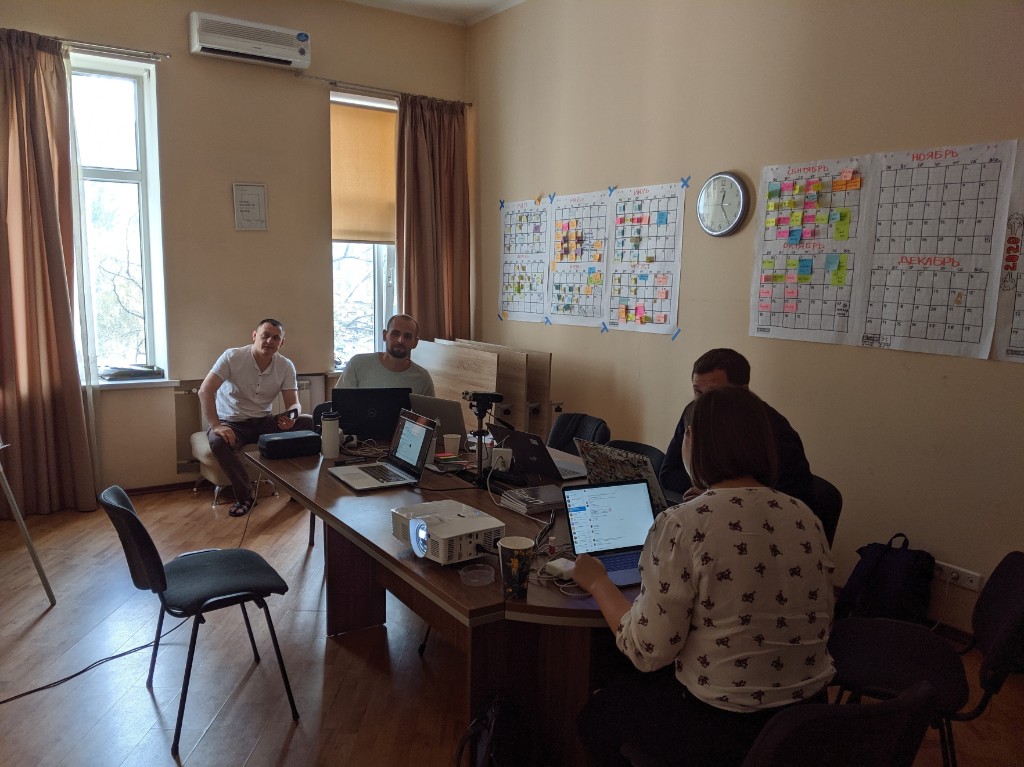
A small team working on laptops around a table during an on-site training session, with planning calendars on the wall.
On-site training Small groups, real laptops, the team's own code on the screen.
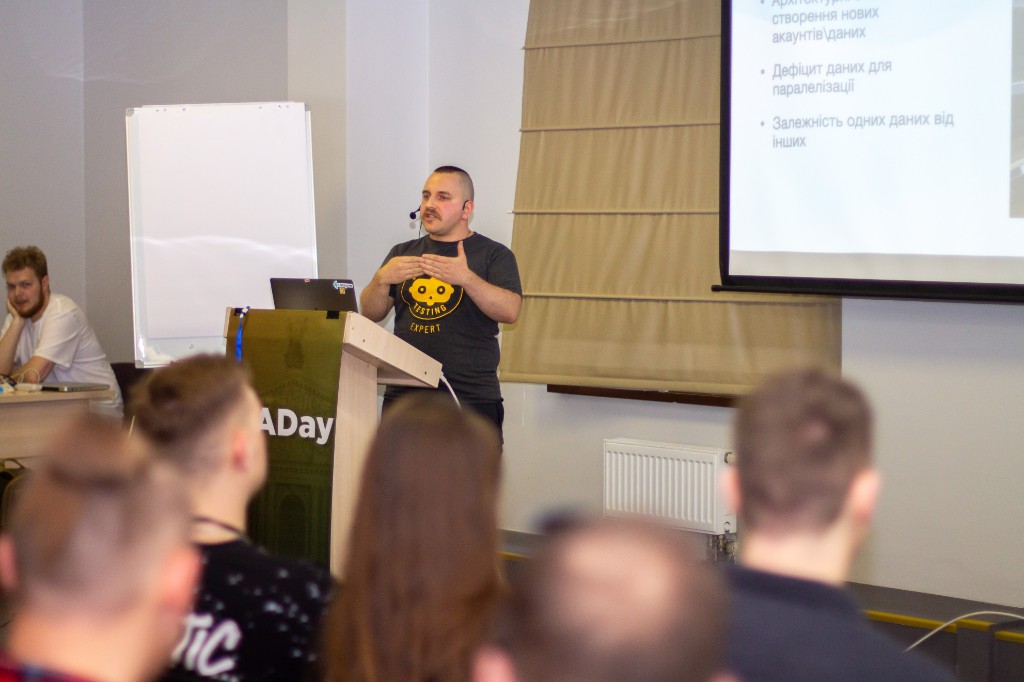
Oleksandr Khotemskyi speaking at a QA Day conference in front of a slide about test data problems.
Conference talk QA Day — test data, parallelisation, and the problems teams recognise.
03 / Review & audit

An outside read on what you already built.

Sometimes you do not need training. You need someone experienced to look at the code, the pipeline, and the process, and say plainly what is working and what is quietly costing you.

Test automation code review

A close read of your test suite: architecture, patterns, and the habits that will hurt in six months.

  • Framework structure, abstractions, and readability
  • Locator strategy, waits, fixtures, and test isolation
  • Flakiness: where it comes from and how to remove it
  • Delivered as PR-level comments or a written audit report

Format · One-off audit, or ongoing review as a second pair of eyes

CI/CD & release pipeline audit

Pipelines grow by accident. This is a deliberate look at speed, cost, and how much confidence they really give you.

  • Feedback time, parallelism, and wasted compute spend
  • Quality gates: what blocks a release and what should
  • Rollback and recovery paths that work under pressure
  • Prioritised findings with effort and impact per item

Format · 1–2 weeks, written report and a walkthrough call

Quality process review

Where the testing effort goes today, and whether it is spent on the risks that matter.

  • Interviews with the people who do the work
  • Coverage against real risk, not against a spreadsheet
  • What to automate, what to keep manual, what to stop doing
  • Clear ownership between QA, developers, and operations

Format · Review plus recommendations the team can execute

Hiring & technical assessment support

Help deciding who can actually do the job, before you spend six months finding out.

  • Interview questions and take-home tasks worth doing
  • Joining panels as an external technical interviewer
  • Levelling and expectations for QA and automation roles
  • Onboarding plan for the person you hire

Format · Per interview, or a short advisory engagement

04 / Strategy & planning

Plan the next year of the product, not the next sprint.

For founders, CTOs, and engineering leads who need a quality and delivery plan that survives contact with reality — and a person to keep them honest while it is executed.

Test strategy & QA roadmap

A written strategy for a product or a team: what you test, at which layer, and who owns it.

  • Risk map of the product and the cost of each failure
  • Tooling choices, with the trade-offs written down
  • Metrics that tell you something and targets worth hitting
  • A phased roadmap your team can start on Monday

Format · 2–4 weeks, document plus working sessions

Delivery & release engineering

Turning releases from an event into a routine — the work described in chapter 01 of my story, done for your team.

  • Continuous releases, trunk-based flow, and feature flags
  • Observability: knowing something broke before users tell you
  • On-call, escalation, and incident response that people follow
  • Postmortems that produce prevention, not blame

Format · Consulting engagement, scope agreed up front

Fractional quality lead

A few hours a week of senior attention, for teams that need the judgment but not a full-time hire.

  • Regular planning and prioritisation with your leads
  • Design reviews and technical decisions you can lean on
  • Unblocking engineers who are stuck on hard problems
  • Growing your people so the role becomes unnecessary

Format · Monthly retainer, fixed hours per week

AI adoption for engineering teams

Moving a team from scattered personal experiments to a shared, inspectable way of working with AI.

  • Finding the bottlenecks worth automating first
  • Shared agents, skills, and prompts with real context
  • Rules, review, and accountability that keep humans in charge
  • Measuring the gain and dropping what does not help

Format · Assessment, pilot, then rollout with the team

05 / Free for veterans

Your qualification should survive your service.

If you are serving now, or you came back and the industry moved on without you, mentoring and consultations from me are free. One to one or in a group, on whatever you actually need — no trial, no upsell, no catch. This is the part of my work I do as a volunteer.

Why I do this

I served too. I know what a year away from a keyboard does to your confidence.

I was a soldier in the State Border Guard Service during the full-scale invasion, including in the Bakhmut area. Coming back, the hardest part is not the technology — it is the feeling that everyone moved on while you were busy with something more important. That feeling goes away much faster when there is someone to ask. This is what I can give.

Who it is for: veterans with combatant status, people currently serving, and those going through treatment or rehabilitation. No documents, no forms, no proof — write to me, say a few words about your situation, and we will find a time that fits your rotation or your treatment schedule.

Пишіть українською — так буде простіше.

Write to me
06 / How it works

Three steps, no sales process.

I would rather spend thirty minutes understanding your problem than send you a price list for something you do not need.

Intro call

Thirty minutes. You describe the situation, I ask uncomfortable questions, and we both find out whether I am the right person for it.

Proposal

A short written proposal: scope, format, timeline, and price. No surprises later, and no obligation to accept it.

Delivery

Sessions, workshop, report, or ongoing advisory — whatever we agreed, with the outcome written down at the end.

Pricing is agreed after the intro call. It depends on format, team size, and depth — hourly, per workshop, or a monthly retainer. I invoice as a registered Ukrainian sole proprietor, and I am comfortable signing an NDA before we talk about anything specific.

07 / Expertise

What I can speak to with a straight face.

This is the ground I have actually worked on. Outside it, I will say so and point you to someone better.

Areas I work in

  • Testing strategy
  • QA automation
  • Playwright
  • TypeScript / JavaScript
  • Node.js
  • AI in testing
  • AI-assisted engineering
  • Load testing
  • Backend performance
  • UI performance
  • Accessibility testing
  • Mobile testing
  • API & contract testing
  • Exploratory testing
  • CI/CD
  • Continuous releases
  • Release operations
  • Feature flags
  • Observability
  • Incident response
  • Docker
  • Cloud test infrastructure
  • Distributed test farms

Where I will not oversell

  • Security: I can run the risk conversation and the delivery side, but I am not a security engineer.
  • Kubernetes: an informed user of Kubernetes-based environments, not a platform specialist.
  • AI scientist: engineering integrator and workflow builder, not an ML scientist.
08 / Track record

Taught, shipped, and measured.

I have been teaching this material to Ukrainian and international engineers for a decade, while doing the same work in production.

15+
years in quality
engineering
1,000+
engineers
trained
100+
talks, workshops
& streams
10
years leading
Hot Testing
2026
DOU Awards winner
with CyborgTests
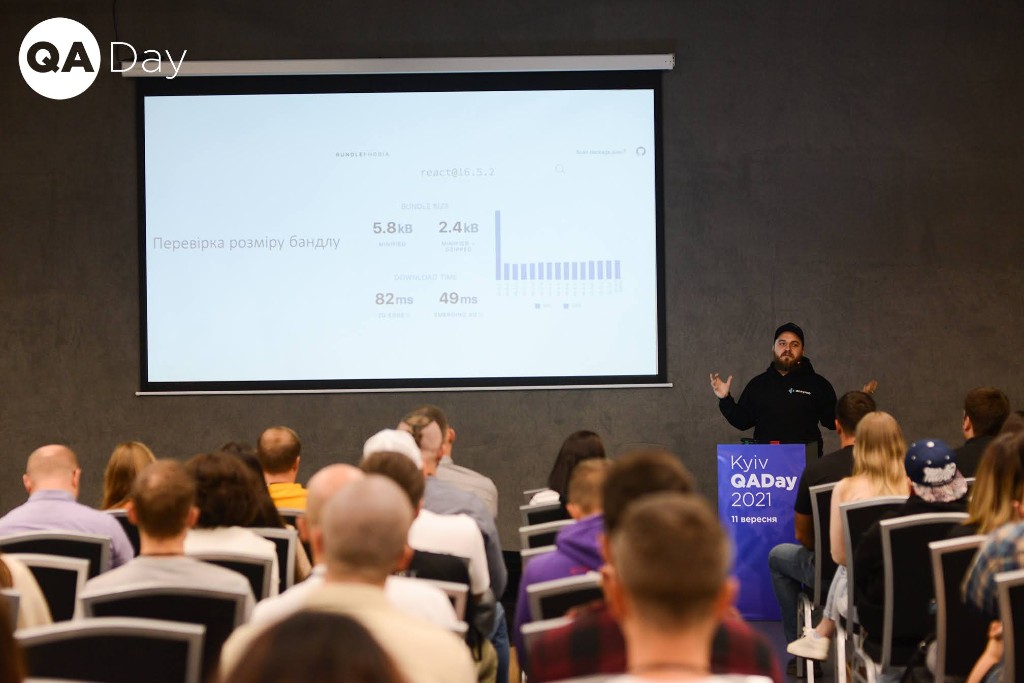
Oleksandr Khotemskyi speaking to a full hall at Kyiv QA Day 2021, next to a slide about checking JavaScript bundle size.
Kyiv QA Day 2021 Front-end performance, to a full room — one of a hundred-plus talks and workshops.

Prefer to see the work first? The Hot Testing YouTube channel has years of streams and workshops, and CyborgTests is the product built out of the same experience. Watch a few hours before you spend a euro.

09 / Practical questions

The things you were going to ask anyway.

Which languages do you work in?

English and Ukrainian. Training, mentoring, and written reports are available in both.

Remote or on-site?

Remote by default, which keeps it cheaper and easier to schedule. On-site in Kyiv is possible, and travel elsewhere can be arranged for multi-day corporate training.

How large can a training group be?

Hands-on workshops work best with up to twelve to fifteen people. Talks and lecture-style sessions scale to the whole engineering org.

Do you sign NDAs?

Yes. I regularly work under NDA before seeing code or infrastructure, and I am happy to sign yours before we discuss specifics.

How does payment work?

I invoice as a registered Ukrainian sole proprietor and can work with international companies. Rate and schedule — hourly, per engagement, or monthly retainer — are agreed in the proposal after the intro call.

Can you start soon?

Usually yes. I keep capacity for mentoring and short reviews, and larger training or consulting engagements are scheduled a few weeks ahead. Ask and I will tell you honestly.

The shortest section

Tell me what you need.

Describe the team, the problem, and the deadline. If I am the right person, I will say how I would approach it. If I am not, I will tell you that too.

Message me on WhatsApp